
Smart Rings vs Smartwatches:
AI Health Tracking Truth 2026
Finger PPG wins at rest: digital arteries deliver pristine overnight HRV within +/-8 ms. Wrist wins in motion: anchored optical arrays hold workout truth within +/-3 BPM. We profiled the Oura Ring 5, Apple Watch Series 11, and 3 more champions below. Filter by your goal to reveal your match.
Oura Ring 5
Gold-standard passive recovery • 12-channel PPG on digital arteries

Apple Watch Series 11
FDA-cleared sleep apnea alerts • S11 + Apple Intelligence

RingConn Gen 3
10–12 day battery • zero monthly fees

Garmin vivoactive 5
11-day longevity • Training Readiness AI

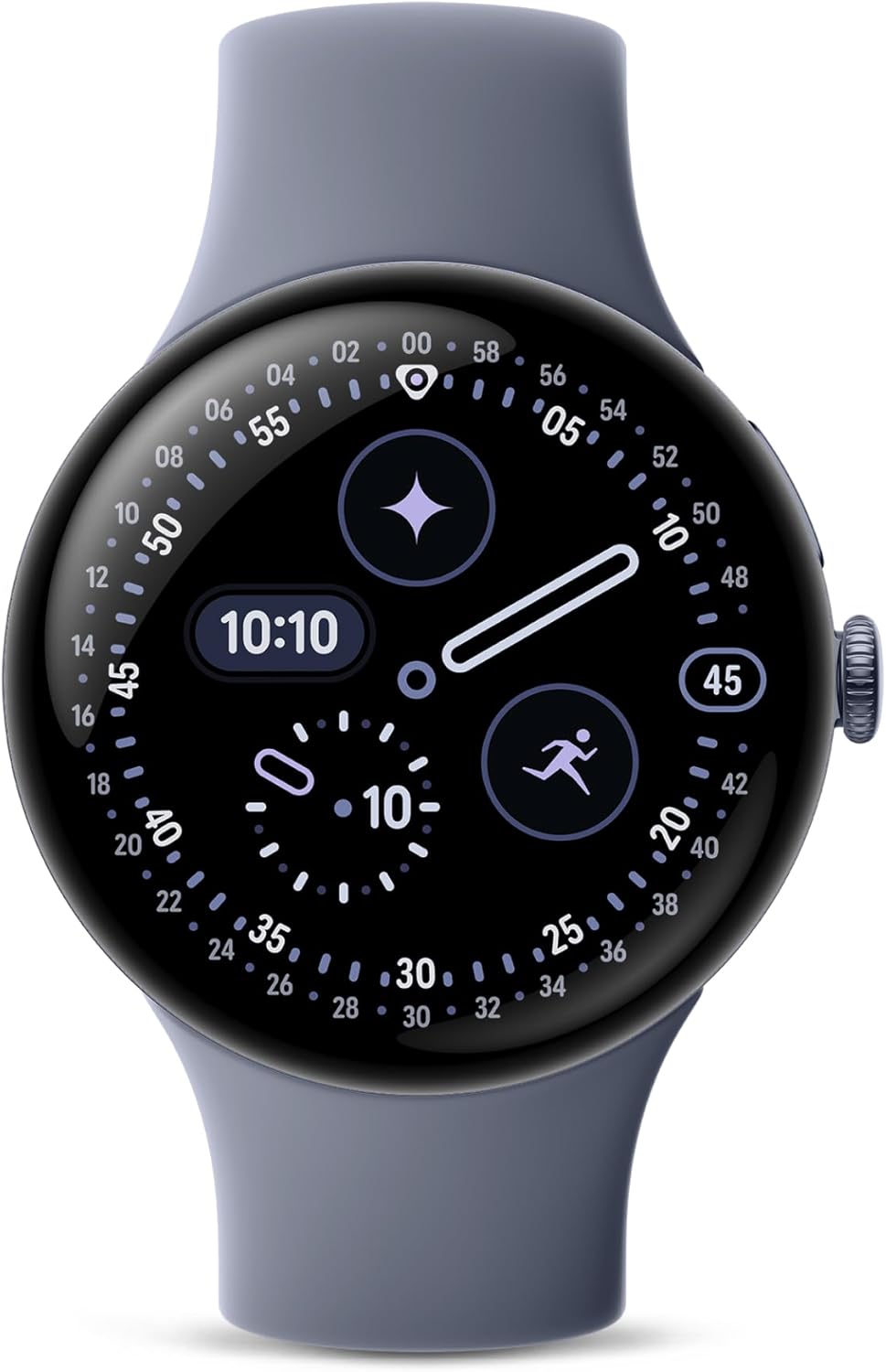
Google Pixel Watch 4 (45mm)
Gemini Health Coach • Loss of Pulse detection
Form-Factor Lab: Rings vs Watches by Metric
Resting telemetry validated against clinical ECG (r > 0.98); workout HR against chest straps; FDA paths from 510(k) K240929 and De Novo DEN230041 filings. Highlighted cell wins the row metric.
| Form Factor | Rest HR / HRV | Workout HR | Battery | FDA Edge | AI Strength |
|---|---|---|---|---|---|
| Oura Ring 5 (Ring) | +/-2 BPM, +/-8 ms HRV | Degrades to +/-8 BPM in grip | 6–9 days unbroken | Wellness + ResMed bridge | Health Radar illness prediction |
| RingConn Gen 3 (Ring) | Finger PPG, zero subs | No live display by design | 10–12 days, thinnest | Continuous SpO2 screening | Sleep apnea risk scoring |
| Apple Watch Series 11 (Watch) | Strong when charged nightly | +/-3 BPM anchored array | 24–38 hours | 510(k) K240929 apnea + BP | Vitals app + Apple Intelligence |
| Garmin vivoactive 5 (Watch) | 11-day unbroken baselines | +/-3 BPM + dual GPS | Up to 11 days | General wellness | Training Readiness 6-vector |
| Pixel Watch 4 (Watch) | Skin temp baselines | Dual-frequency GPS truth | 30–40 hours | Loss of Pulse detection | Gemini conversational coach |
memory The Physics: Why Fingers Win at Rest and Wrists Win in Motion
Both form factors use Photoplethysmography: green LEDs track volumetric blood flow for heart rate while red and infrared wavelengths capture SpO2 and HRV. Beer-Lambert absorption governs the signal, so amplitude depends on vessel density near the skin. Finger digital arteries sit shallow with a dense reactive capillary bed, giving rings a high signal-to-noise pulse wave during sleep. The wrist dorsum is sparser, but a tight strap plus multi-path arrays and accelerometer noise cancellation lets watches subtract motion that grip-flex injects into rings.
PPG SNR = Perfusion Amplitude / Motion ArtifactAt rest, finger perfusion amplitude dominates and artifact approaches zero, so rings hold +/-2 BPM with HRV correlation r > 0.98 vs gold-standard ECG. Under barbell grip, flexor-tendon shift spikes the denominator and ring error exceeds +/-8 BPM, while strapped watches hold +/-3 BPM.
receipt_long Clinical Receipts: FDA Paths and Hard Limits
Apple K240929 vs Samsung DEN230041: what each FDA path proves +
Why no ring or watch measures glucose non-invasively +
Grip-flex artifact: the mechanism that breaks ring workout HR +
gavel Verdict: Which Form Factor Wins for You
Buy Oura Ring 5 if:
Sleep architecture, overnight HRV, and passive recovery are your top goals and you accept a $5.99/mo plan for full Health Radar AI.
Buy Apple Watch Series 11 if:
You train hard, want live zones on-wrist, and need FDA-cleared sleep apnea plus hypertension screening in one device.
Buy RingConn Gen 3 if:
You want ring-grade recovery with zero subscriptions and the longest battery here (10–12 days) in the thinnest chassis.
Buy Garmin vivoactive 5 if:
You refuse nightly charging and want 11-day Training Readiness, Body Battery, and GPS truth for under $200.
Buy Pixel Watch 4 if:
Conversational Gemini coaching, dual-frequency GPS, and Loss of Pulse safety detection matter more than multi-day battery.
Deploy a dual-device + CGM stack if:
You want zero compromise: ring overnight for HRV baselines, watch for workouts, Dexcom Stelo for glucose, fused by one AI dashboard.
help Ring vs Watch FAQs: Accuracy, FDA, and Workout Truth
Are smart rings more accurate than smartwatches for sleep and recovery tracking? +
Can any smart ring or smartwatch measure blood glucose non-invasively in 2026? +
Which smartwatches are FDA-cleared for sleep apnea detection in 2026? +
Why do smart rings lose heart rate accuracy during active workouts? +
menu_book Complete Ring vs Watch Compendium and Telemetry Vault
Full Crawlable ReferenceFull legacy comparison preserved: architecture, sensor physics, 3 scenario evaluations, FDA filings, CGM fusion, and verdict. Tap any section to expand.
public
1. The Philosophical and Architectural Divergence
The structural architecture of a wearable device dictates user behavior, which fundamentally governs the fidelity of data supplied to artificial intelligence models. The central debate between smart rings and smartwatches is not merely about styling. It represents a profound divergence between active interaction and passive surveillance.
The Smartwatch: The Active Interactive Companion
Smartwatches, led by the Apple Watch Series 11, Google Pixel Watch 4, and Samsung Galaxy Watch 8, are engineered as high-luminance, interactive compute nodes. Featuring Always-On OLED panels reaching up to 3,000 nits, on-wrist application frameworks, speaker arrays, and cellular modems, they demand active user engagement throughout the waking day. During athletic performance, this active paradigm is unmatched: runners, cyclists, and weightlifters receive real-time cardiovascular telemetry, live pace guidance, dual-frequency GPS route mapping, and interactive interval timers directly on their wrist.
However, this computational density creates a critical flaw for longitudinal bio-tracking: severe battery constraints. Restricted to 18 to 40 hours of operation between charges, smartwatch wearers face an unavoidable daily dilemma. Charging the watch overnight forfeits nocturnal sleep architecture, resting heart rate, and baseline HRV metrics. Conversely, charging during the day misses active cardiovascular strain and movement telemetry. This periodic removal creates data gaps that impair long-term AI trend analysis.
The Smart Ring: The Passive Unobtrusive Observer
Smart rings, exemplified by the Oura Ring 5, Samsung Galaxy Ring, RingConn Gen 2, and Ultrahuman Ring Air, operate under a philosophy of invisible, continuous monitoring. Devoid of displays, haptic motors, or notification engines, they weigh between 2.0 and 8.0 grams, anchoring seamlessly to the proximal phalange. Wearers regularly forget their presence entirely within hours of donning the ring.
This minimal physical footprint resolves the single largest point of failure in wearable health tracking: user compliance. Unbroken, long-term compliance is an absolute prerequisite for machine learning models to establish accurate individual physiological baselines. By eliminating high-power displays, smart rings sustain 5 to 15 days of continuous operation on a single charge, harvesting an unbroken stream of nocturnal and diurnal telemetry without human intervention.
sensors
2. Physiological Sensor Mechanics and Signal Integrity
Comparative accuracy between rings and watches is rooted in human vascular anatomy. Both form factors rely primarily on Photoplethysmography (PPG) to measure cardiac function. PPG arrays emit green LED light to measure volumetric microvascular blood flow for heart rate, alongside red and infrared wavelengths to capture blood oxygen saturation (SpO2) and heart rate variability (HRV).
Digital Arteries vs. Wrist Capillaries
For resting biometric capture, the smart ring holds an inherent anatomical advantage. The digital arteries supplying the fingers run close to the epidermal surface and feature a far denser, highly reactive capillary bed than the dorsal wrist. This anatomical reality provides ring-based optical sensors with a high-amplitude, high signal-to-noise ratio (SNR) PPG wave.
A benchmark clinical validation study published in the Journal of Medical Internet Research confirmed that nocturnal resting heart rate and HRV measurements obtained via finger-worn PPG sensors exhibit a near-perfect correlation (r greater than 0.98) with gold-standard medical electrocardiography (ECG). During resting conditions, top-tier smart rings achieve resting heart rate accuracy within +/-2 BPM and HRV accuracy within +/-8 milliseconds, establishing smart rings as the gold standard for overnight recovery metrics.
Motion Artifacts and Active Exercise Degradation
However, the smart ring's anatomical superiority collapses during dynamic physical exertion, particularly activities involving hand grip. During weightlifting, rowing, cycling, or racket sports, contraction of the digital flexor tendons shifts the ring on the finger. This displacement alters the distance and angle between the interior LED domes and the dermal vascular bed, injecting severe optical motion artifacts into the signal.
Consequently, smart ring active heart rate accuracy degrades significantly during high-intensity exercise, deviating by up to +/-7 to 8 BPM. Most ring manufacturers explicitly disable live active heart rate displays during workouts for this reason. Smartwatches, tightly strapped to the forearm above the wrist joint, resist grip displacement. Strapped securely, smartwatches leverage multi-path optical arrays and high-speed accelerometer noise-cancellation algorithms, maintaining active workout heart rate accuracy within +/-3 BPM.
bedtime
3. Scenario 1: Nocturnal Sleep Architecture and HRV Baselines
Task: Capture 14 consecutive nights of unbroken resting heart rate variability (rMSSD), nocturnal skin temperature baseline, and 4-stage sleep architecture (Light, Deep, REM, Wake) without user friction or mid-week charging requirements.
Ring Result: 14 Unbroken Nights
The smart ring architecture (Oura Ring 5, RingConn Gen 2) harvests uninterrupted 100 Hz PPG telemetry across all 14 nights on a single charge cycle. Finger digital artery placement delivers high SNR pulse waves during sleep. Machine learning models classify 4-stage sleep cycles with 79% clinical agreement against polysomnography (PSG). The ring detects subtle 0.2-degree temperature shifts and 3 ms weekly HRV drifts indicating illness or overtraining. Superior compliance comes from zero wrist weight and multi-day battery endurance, with zero missed nights due to charging.
Watch Result: Accurate but Gappy
The smartwatch architecture (Apple Watch Series 11, Galaxy Watch 8) captures high-accuracy nocturnal metrics, but requires structured daily charging schedules (for example during morning showers or dinner). If forgotten, the battery dies mid-sleep, resulting in 2 to 3 missing nights per fortnight. Wrist movement during REM sleep can introduce false awakening tags. Highly accurate when worn, but vulnerable to data gaps caused by battery depletion and sleep discomfort.
watch
4. Deep Dive: 2026 Smartwatch and Smart Ring Ecosystems
The 2026 smartwatch landscape is defined by immense computational power, robust clinical FDA clearances, and deep generative AI integrations. Flagship smartwatches have evolved from fitness accessories into medical diagnostic monitors. The smart ring market has consolidated around ultra-lightweight titanium hardware designed for total passive compliance, long battery life, and refined nocturnal bio-analytics.
The 2026 Smartwatch Ecosystem
Apple Watch Series 11 ($299, zero subscription) is built on the S11 chip with a wide-angle Always-On OLED display in atomic ceramic coating. Series 9, 10, and 11 maintain FDA 510(k) clearance (K240929) for Sleep Apnea Notifications, using a high-precision accelerometer array to measure breathing disturbance micro-movements over 30-day windows, backed by a 1,448-subject pivotal trial. Series 11 adds FDA-approved Hypertension Alerts from 30-day arterial pulse-wave velocity. Battery remains the constraint at 24 hours, or 38 hours in Low Power Mode.
Samsung Galaxy Watch 8 series emphasizes metabolic and cardiovascular diagnostics via the BioActive sensor framework with One UI 8 and Google Gemini. It introduces a non-invasive skin Antioxidant Index (5-second carotenoid check), an AGEs Index for cellular metabolic aging, and sleeping pulse-wave Vascular Load. Samsung secured FDA De Novo authorization (DEN230041) for sleep apnea screening at 82.7% sensitivity and 87.7% specificity in a 620-person trial.
Google Pixel Watch 4 ($399) pairs the domed 3,000-nit Actua 360 display with the Snapdragon W5 Gen 2 platform and dual-frequency GPS for urban canyon accuracy. It is the primary hardware platform for the Gemini AI Health Coach, which synthesizes sleep, stress, and cardio load so users can converse with the watch to adjust daily workout intensity. It also adds Loss of Pulse detection.
Garmin Fenix 8 and vivoactive 5 ($234.99 to $999, zero subscription) prioritize multi-week solar battery endurance over lifestyle notifications. Garmin's 6-vector Training Readiness score synthesizes acute load, 7-day HRV, sleep score, sleep history, recovery time, and acute stress. A 2026 case study vs the LeCoach algorithm showed Garmin scoring 85/100 on acute single-night recovery while LeCoach flagged chronic multi-week HRV depression at 56/100, uncovering hidden central nervous system fatigue.
Go deeper: 5 Best Health Smartwatches in 2026 ↗
The 2026 Smart Ring Ecosystem
Oura Ring 5 ($399 to $499 plus $5.99/mo) cut internal volume 40%, pairing an all-titanium shell and flush sensor domes with a 12-channel multi-wavelength PPG array and research-grade temperature sensors. Health Radar, built by 40 in-house clinical researchers, watches background shifts for early illness, nocturnal blood pressure alterations, and respiratory strain. Oura imports lab blood tests, logs GLP-1 pharmacology, and routes breathing disturbance alerts into ResMed's clinical pathway.
Samsung Galaxy Ring ($399.99, zero subscription) weighs 2.3 to 3.0 grams with 5 to 7 day battery, delivering a daily AI Energy Score from sleep consistency, prior load, and resting HRV inside Samsung Health. Samsung announced in 2026 that the Galaxy Ring is navigating FDA OTC clearance for sleep apnea risk evaluation.
RingConn Gen 2 ($299, zero subscription) is the ultra-thin 2.0 mm chassis champion with 10 to 12 day battery and continuous SpO2 sleep apnea monitoring. Ultrahuman Ring Air ($349, zero subscription) counters with Adenosine Clearance caffeine windows, PowerPlugs modular AI, 2.4-gram weight, and up to 15-day battery.
Go deeper: Top 5 Smart Rings in 2026 ↗
| Flagship | Standout Capability | Battery | Regulatory / AI Note |
|---|---|---|---|
| Oura Ring 5 | 12-channel PPG, Health Radar | 6–9 days | ResMed clinical bridge, $5.99/mo |
| Apple Watch Series 11 | S11 chip, Vitals app, ECG | 24–38 hours | FDA 510(k) K240929 |
| RingConn Gen 3 | 2.0 mm thin, continuous SpO2 | 10–12 days | Zero subscription |
| Garmin vivoactive 5 | Training Readiness, Body Battery | Up to 11 days | Solar endurance line |
| Pixel Watch 4 | Gemini coach, dual-frequency GPS | 30–40 hours | Loss of Pulse detection |
exercise
5. Scenario 2: Active Telemetry plus FDA Clinical Screening
Task: Maintain continuous heart rate tracking, zonal feedback, and accurate caloric expenditure during a 60-minute High-Intensity Interval Training (HIIT) session involving kettlebell swings, rowing, and heavy barbell lifts.
Watch Result: Locked On Through Grip Work
The smartwatch architecture (Apple Watch Series 11, Garmin Fenix 8) keeps its multi-path optical sensor array tightly anchored to the forearm above wrist flexing zones. Onboard accelerometers isolate and subtract grip motion artifacts. Heart rate tracking maintains +/-3 BPM fidelity against chest strap ECGs across rapid cadence shifts, with live screens showing heart rate zones and interval alerts. Excellent active telemetry, real-time visual feedback, and reliable high-grip signal retention.
Ring Result: Signal Breaks Under Load
The smart ring architecture (Oura Ring 5, Ultrahuman Air) suffers as heavy hand gripping compresses finger tissue and rotates the ring around the phalange. Optical LED alignment breaks contact with dermal layers, introducing severe motion artifacts. Active heart rate errors exceed +/-8 BPM, producing missing or flatlined workout PPG charts. Unsuitable for active, high-grip athletic telemetry with no real-time display.
Clinical Diagnostics: FDA Clearances and Sleep Apnea Screening
Sleep architecture and respiratory disturbance monitoring represent the most competitive regulatory frontier of 2026. For general sleep stage classification, smart rings lead peer-reviewed accuracy studies: non-intrusive wear plus dense finger capillaries deliver pristine PPG, reaching 79% four-stage sleep staging accuracy against laboratory polysomnography and outperforming wrist devices that confuse still wakefulness with deep sleep.
For formal Obstructive Sleep Apnea screening, smartwatches hold the definitive regulatory lead: Apple Watch Series 9 through 11 via FDA 510(k) K240929 and Galaxy Watch 7, 8, and Ultra via FDA De Novo DEN230041. Neither device measures airflow directly. Instead, models analyze secondary cascades: apneic desaturation dips trigger sympathetic heart rate spikes plus gasping micro-movements. Apple leans on high-frequency accelerometers over 30-day windows; Samsung fuses PPG pulse-wave amplitude with SpO2 drops. Rings carry the right sensors but lack the validated trials and finalized authorizations watches already hold.
monitoring
6. Metabolic Frontier, CGM Fusion, and Final Verdict
Non-invasive optical blood glucose tracking has long been considered the holy grail of consumer health wearables. Rumors regularly suggest upcoming smartwatches or smart rings capable of measuring blood sugar through near-infrared light or Raman spectroscopy without breaking the skin.
The physical barrier is signal-to-noise ratio. Glucose exists at relatively low blood concentrations (70 to 180 mg/dL), and isolating its tiny optical absorption spectra through melanin variation, fat tissue, and muscle motion has proven unachievable with medical accuracy in consumer form factors.
Consequently, true AI-powered metabolic tracking in 2026 relies entirely on Continuous Glucose Monitors. Minimally invasive sensors like the Dexcom Stelo, Dexcom G7, Abbott Lingo, and FreeStyle Libre 3 Plus insert a flexible micro-filament into subcutaneous arm tissue to measure interstitial glucose continuously, achieving a Mean Absolute Relative Difference (MARD) of 8.8% to 9.2%.
Scenario 3: Multi-Device CGM and Wearable Data Reconciliation
Task: Reconcile simultaneous feeds from a Dexcom Stelo CGM, an Oura Ring 5, and an Apple Watch Series 11 to optimize athletic recovery and metabolic health. The multi-sensor AI reconciliation engine (Apple Health, Google Health, Vora) ingests raw telemetry via unified APIs and weights each feed by sensor domain strength. The Oura Ring 5 becomes the primary source for overnight HRV, resting heart rate, and skin temperature baselines. The Apple Watch Series 11 becomes the primary source for active workout calories, peak heart rate, and FDA sleep apnea micro-movement monitoring. The Dexcom Stelo CGM becomes the primary source for interstitial glucose curves. The LLM engine then correlates a 45 mg/dL post-breakfast glucose spike directly to a 42 ms overnight HRV drop from poor sleep, advising an easy recovery walk rather than intense HIIT. This eliminates single-device compromises by weighting each wearable by its anatomical and mechanical strengths.
The Verdict for Health Optimizers
Determining whether a smart ring or a smartwatch is superior for AI health tracking in 2026 depends entirely on your specific health priorities and active lifestyle. The two form factors are complementary tools rather than mutually exclusive competitors.
Choose a Smart Ring if: Your primary goals are continuous sleep architecture tracking, passive overnight recovery scoring, baseline HRV monitoring, and multi-day battery life without display distractions or nightly charging routines.
Choose a Smartwatch if: You require real-time workout telemetry, live cardiac zone displays during exercise, on-wrist notification management, and FDA-cleared diagnostic screening for sleep apnea or chronic hypertension.
Deploy a Dual-Device Stack if: You seek uncompromised health tracking. Wearing a smart ring overnight establishes clean baseline recovery data, while wearing a smartwatch during physical workouts provides precise athletic telemetry, synthesized into a single actionable dashboard by modern AI health platforms.
Sources and Clinical References: Journal of Medical Internet Research (Ring PPG ECG Validation 2022); FDA 510(k) K240929 (Apple Sleep Apnea); FDA De Novo DEN230041 (Samsung Sleep Apnea); FDA Safety Communication on Non-Invasive Glucose (2024-2026); Bloomberg Health Tech Telemetry Report (Jan 2026).
